
Static vs. Dynamic Websites: Which is Better for Your Business?
Introduction
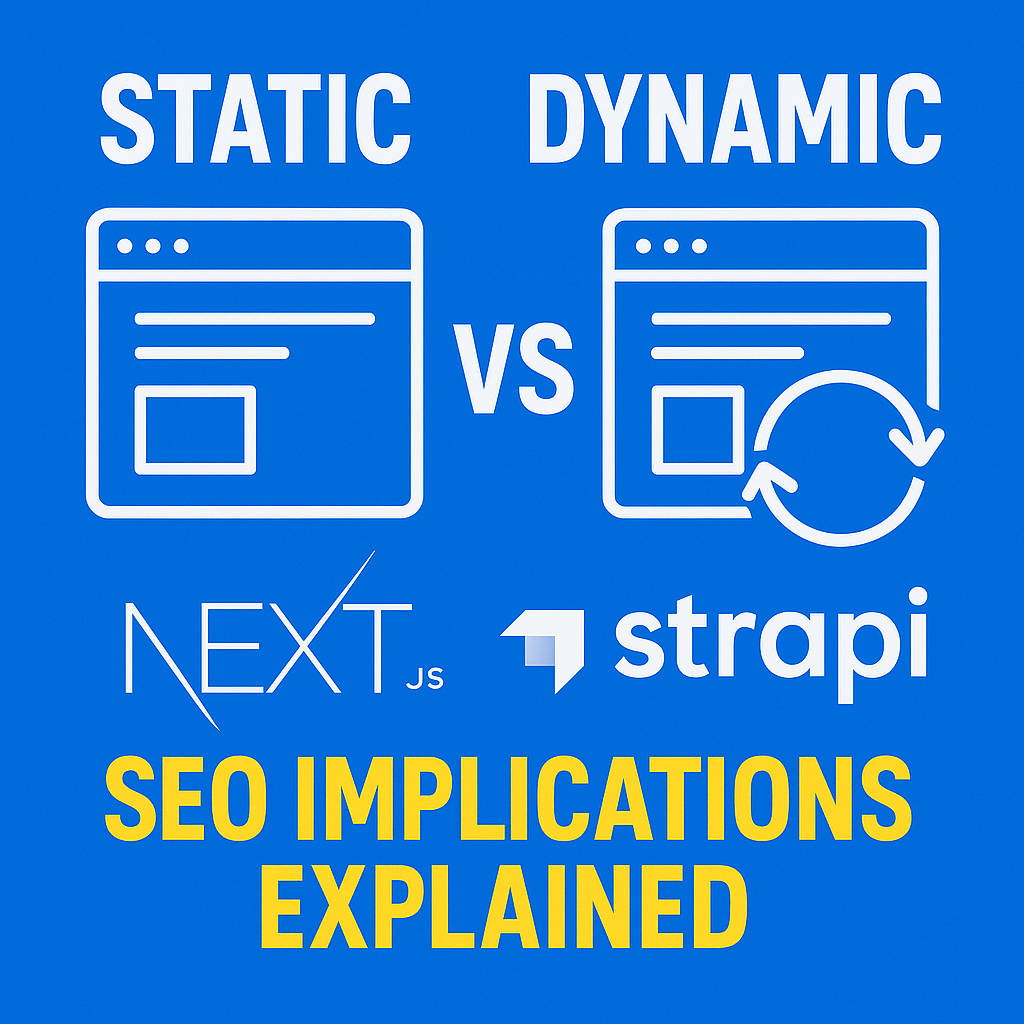
When building a modern website, you face an important decision that impacts your business’s online presence: should you build a static website that’s pre-generated, or a dynamic website that updates in real-time? This choice affects everything from how quickly your site loads to how easily you can update content.
As a business owner, understanding these approaches will help you make the right choice for your specific needs. In this article, we’ll break down both methods, their implications for your business, and help you decide which approach works best for your goals.
Understanding Website Technologies
Before diving deeper, let’s briefly explain the modern technologies that power these websites. We use a combination of advanced tools:
- A powerful content management system (CMS) that makes it easy for you to update your website content: Strapi.
- Modern web development frameworks that ensure your site is fast, secure, and search-engine friendly: Next.js.
These technologies work together to create either a static or dynamic website, depending on your needs. Now, let’s explore both options in detail.
Option 1: Static Generation (Build-Time Rendering)
How Static Generation Works
With static generation, Next.js pre-builds all your HTML pages during the build process. When you update content in Strapi:
- Changes are saved in Strapi’s database
- You trigger a new build of your Next.js site
- Next.js fetches the latest data from Strapi and generates fresh HTML files
- These pre-built HTML files are deployed to your hosting service
This process happens entirely at build time, meaning all the HTML for your site is created before any users visit. Your website becomes a collection of pre-built HTML files that can be served very quickly.
SEO Benefits of Static Generation
-
Lightning-Fast Page Load: Pre-built HTML files are served instantly, reducing load times dramatically. Google rewards faster sites with better rankings.
-
Perfect for SEO Crawlers: Search engines see complete HTML content immediately, with no JavaScript execution required. This leads to more reliable indexing.
-
Improved Core Web Vitals: Static sites typically perform better on metrics like Largest Contentful Paint (LCP) and First Input Delay (FID) - key factors in Google’s ranking algorithm.
-
Enhanced Stability: Your site stays up even if your CMS experiences downtime, as the live site doesn’t depend on real-time API calls.
-
Cost Efficiency: Hosting static sites is cheaper since they require less server processing power.
Drawbacks of Static Generation
-
Content Delay: Changes in your CMS aren’t reflected on your site until you rebuild and redeploy - creating a lag between content creation and publication.
-
Build Time Complexity: As your site grows, build times can increase, potentially slowing down your publishing workflow.
-
Update Process: You’ll need to set up systems to trigger builds automatically or manually initiate them when content changes.
Option 2: Dynamic Rendering (Server-Side or Client-Side)
How Dynamic Rendering Works
With dynamic rendering, your Next.js site fetches fresh content from Strapi each time a user visits a page:
- Changes are saved in Strapi’s database
- When a user visits your site, Next.js makes an API call to Strapi
- The page is built with the latest content and sent to the user
- No rebuild process is required to see updated content
The key difference is that pages are generated “on-demand” when requested, not ahead of time.
Benefits of Dynamic Rendering
-
Real-Time Content: Changes in Strapi appear immediately on your site after a page refresh - no rebuild needed.
-
Simplified Content Management: Content creators don’t wait for technical rebuilds to see their changes live.
-
Personalized Experiences: Easier to implement user-specific content and recommendations.
-
Interactive Features: Better suited for highly interactive features requiring fresh data.
SEO Drawbacks of Dynamic Rendering
-
Slower Page Load: Each page request requires an API call to Strapi, which can increase load times and hurt SEO rankings.
-
Potential Crawling Issues: If server-side rendering isn’t optimized properly, search engines might encounter timeouts or incomplete content.
-
Server Cost: Dynamic sites need more powerful servers to handle processing, increasing hosting costs.
-
Reliability Concerns: If your Strapi instance goes down, your entire website could be affected.
Making the Right Choice for Your Business
Choose Static Generation If:
- SEO performance is your top priority
- Your content doesn’t change frequently (daily or weekly updates)
- You want maximum reliability and performance
- Your site serves primarily informational content
- You have a process for managing regular rebuilds
Choose Dynamic Rendering If:
- Real-time content updates are essential
- Your content changes very frequently (hourly updates)
- Personalization is a key part of your site strategy
- Your business can tolerate slightly slower page loads
- You’re willing to invest in more robust hosting
Setting Up Proper Builds for Static Generation
If you choose the static approach, consider what we’ve done to make the process as simple as possible:
-
One-Click Deployment: At Andesphere, we’ve simplified this process with our client portal where you can deploy your updated site with just a single button click.
-
Build Optimization: At Andesphere, we’ve implemented a build optimization system that takes between 30-50 seconds to build the entire site(depends on the size of the site, but that’s the average time it takes).
Conclusion
Both static and dynamic approaches with Next.js and Strapi offer distinct advantages for your business website. Static generation provides superior SEO performance, speed, and reliability at the cost of real-time updates. Dynamic rendering offers immediate content changes but may impact page load times and SEO metrics.
The best choice depends on your specific business needs, content update frequency, and technical resources. Many businesses find that a hybrid approach or starting with static generation and evolving as needed provides the best path forward.
At Andesphere, we typically recommend the static approach for most business websites due to its significant SEO and performance advantages. Our implementation makes the deployment process incredibly simple – with our portal system, updating your static site is as straightforward as clicking a single button, and your site rebuilds in just 30-50 seconds.
Remember: whichever approach you choose, regularly monitoring your SEO performance and user experience metrics will help you refine your strategy for maximum business impact.
Need help implementing the right approach for your business website? Contact our team for a personalized consultation!